
Clark County Criminal History Checks
No single Clark County criminal record screen tells the whole story. Begin with Wisconsin Circuit Court Access for filed cases. Then use the Clerk of Circuit Court when a judgment, complaint, sentencing order, or certified copy matters. The Wisconsin Online Record Check System adds a name-based search of the Crime Information Bureau repository. Jail, corrections, and agency report channels answer different questions.
Prepare a full legal name, spelling variants, middle name, and date of birth when it is proper to use them. A case number or incident number is even better. Common names can produce more than one candidate. Compare the county, filing date, charge history, and other lawful identifiers before deciding that a record belongs to the person being reviewed.
- Search WCCA statewide first, then narrow results to Clark County and the relevant criminal case type.
- Open each likely case and compare its chronology and non-sensitive identifying facts. Save the case number.
- Ask the Clark County clerk for the underlying file or a certified record when exact disposition language matters.
- Order a WORCS history to compare fingerprint-supported Wisconsin entries with the court result.
- Use the jail, DOC locator, or VINE only for the custody or supervision facts each service maintains.
- Challenge an error through the agency that owns the source record, backed by a certified order when needed.
The Clark County government gateway shows how residents reach the county departments involved in record checks.
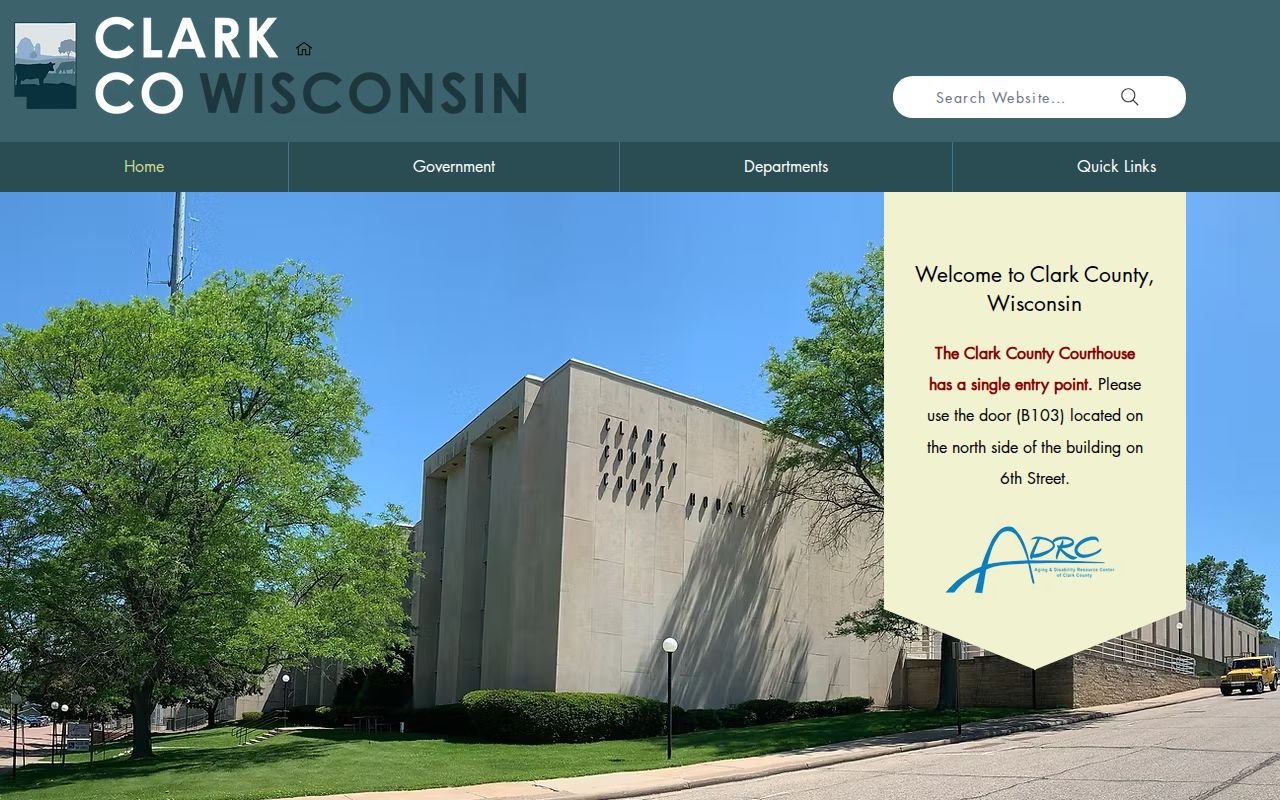
That department structure matters because the sheriff, clerk, jail, and prosecutor do not hold the same record.
Clark County Criminal Record Counters
Room numbers prevent wasted trips at Clark County's connected justice campus. The Clerk of Circuit Court in Room 405 handles case files, docket copies, judgments, and certification. Sheriff records in Room 308 handles incident and accident reports made by deputies, along with sheriff-generated booking material. The jail entrance and 715-743-5380 are the live-custody route. The District Attorney in Room 404 reviews referrals and prosecutes cases, but it is not the court-record custodian.
The courthouse stands at 517 Court Street in Neillsville. General hours are 8:00 a.m. to 4:30 p.m. on weekdays, except county holidays. The ordinary public entrance is on the first floor from Sixth Street. An accessible entrance is on the West Fifth Street side, where the sheriff must be paged. County lots 1 and 2 sit off Sixth Street, while nearby street parking has a three-hour limit.
The official Clark County facility page documents the courthouse entrances, parking, access, and building history.
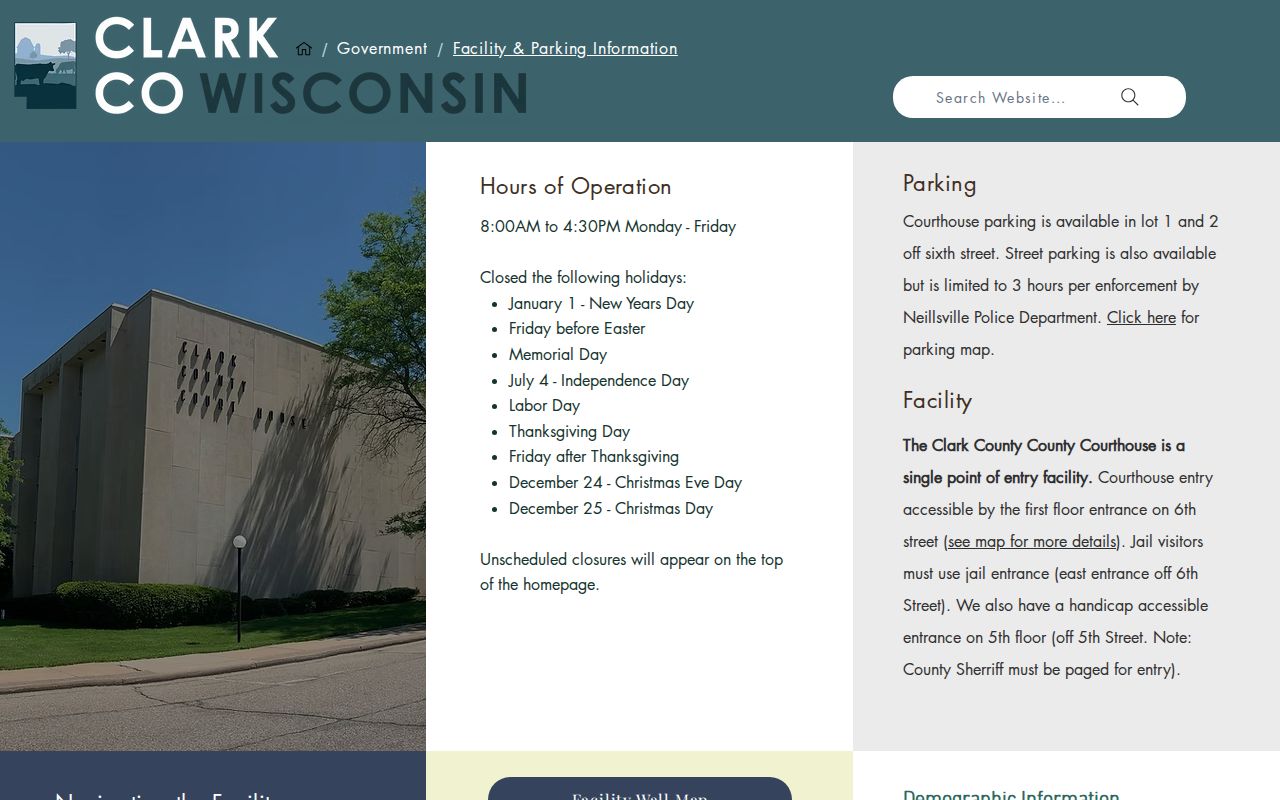
Its floor and access details help a visitor reach the right record counter before the office closes.
Official Background Checks in Wisconsin
The Wisconsin Department of Justice Crime Information Bureau runs WORCS. An ordinary public name-based query costs $7. The search uses biographical details and may return a likely match that needs manual review. It is not fingerprint identification. Alias spellings, a changed name, a missing fingerprint submission, or delayed disposition reporting can also affect the result.
Fingerprint-supported review offers stronger identity evidence, but eligibility and submission rules depend on the authorized purpose. Clark County Jail takes fingerprint appointments at 715-743-5380. Confirm the destination agency, transaction code, required cards, identification, and payment terms before the appointment. For personal federal history, the FBI Identity History Summary requires the subject's own request, fingerprints, and the current FBI fee.
The official WORCS interface presents Wisconsin's name-based request and payment workflow.
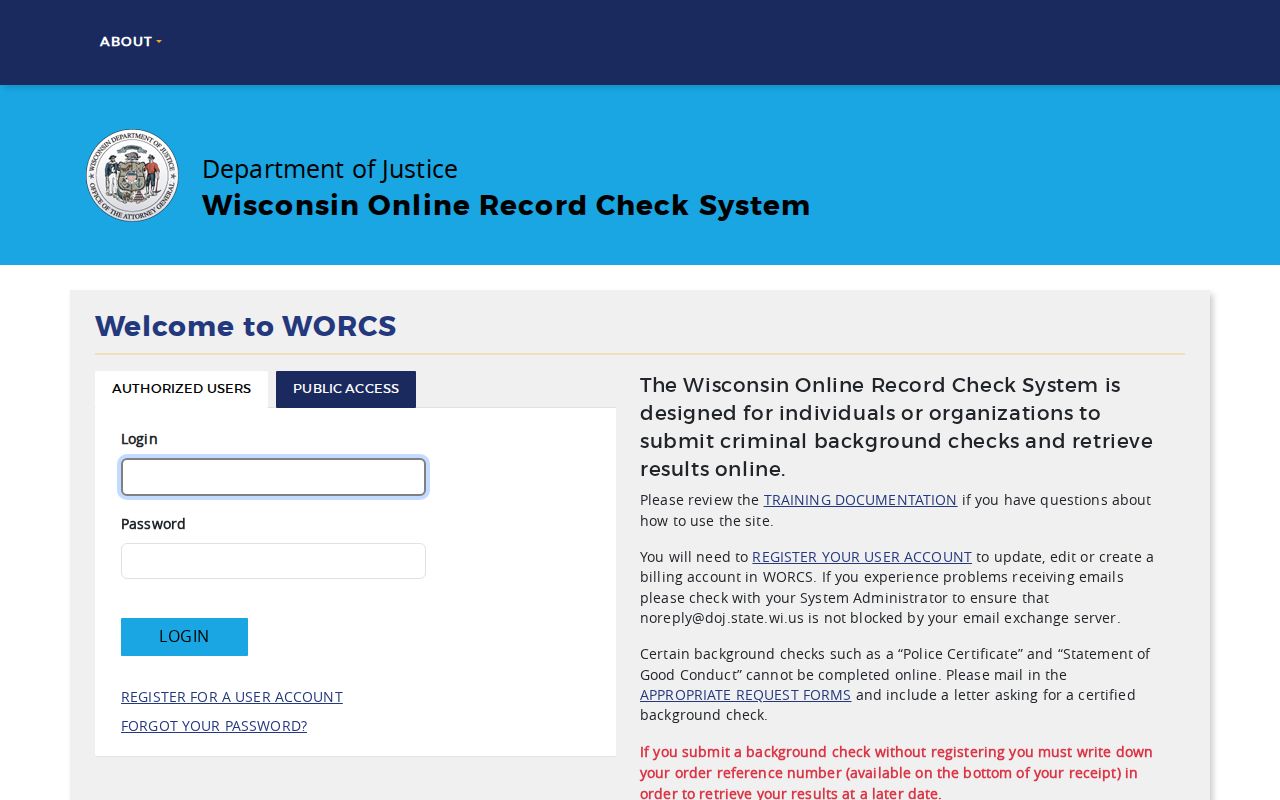
WORCS should be compared with the Clark County court file because the repository and docket serve distinct roles.
Clark County Criminal Search Portals
WCCA, WORCS, and the DOC Offender Locator answer three separate questions. WCCA asks whether a Wisconsin circuit-court case was filed and what the public docket reports. WORCS asks what fingerprint-supported Wisconsin criminal history is associated through CIB's matching process. DOC Locator asks whether the person has a listed corrections identity, custody status, or community-supervision connection. None supplies the full sheriff narrative.
| Official channel | Useful search fields | What it establishes |
|---|---|---|
| WCCA | Last name, first name, middle name, birth date, Clark County, case number, case type, filed dates | Public circuit-court docket and case events |
| WORCS | Request type, name, aliases, date of birth, identifying details, requester data | Name-based CIB criminal-history result |
| DOC Locator | Name, DOC number, birth year, gender, race | Listed corrections custody or supervision status |
The Wisconsin Circuit Court Access search allows a statewide name query with a Clark County filter.
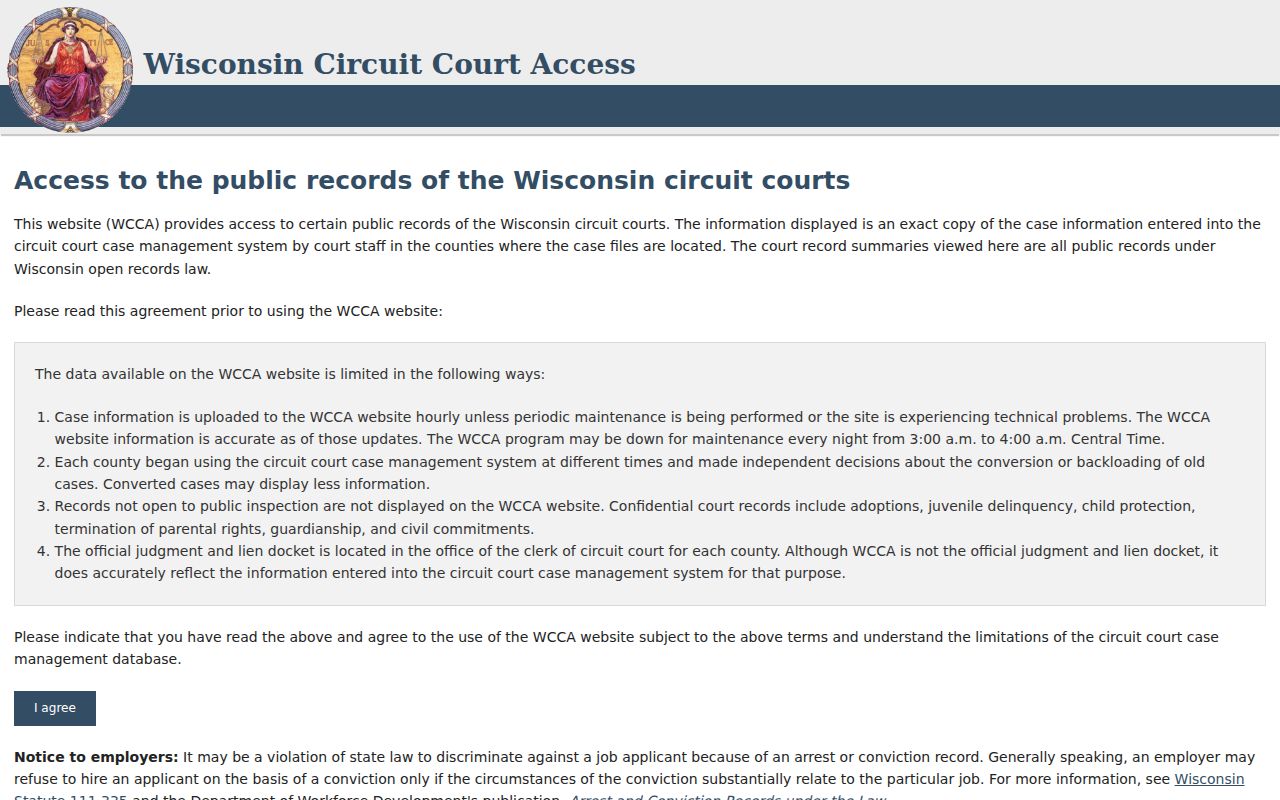
The docket can lag behind the courthouse file, and some documents appear only as event descriptions rather than downloads.
Note: A portal result is a lead to verify, not a certified identity finding or a substitute for the source file.
Kinds of Criminal Records
Clark County criminal records arise at different steps. A deputy or municipal officer creates the incident and arrest report. Jail staff create intake data if a person is booked. The District Attorney decides whether to file a complaint. The clerk preserves the court case. CIB combines fingerprint-supported arrests with later reported outcomes, while DOC maintains corrections and supervision information.
- Incident and arrest report: the event narrative, alleged conduct, officers, evidence references, and arrest facts held by the creating agency.
- Booking record: custody times, booking identifier, intake charge list, fingerprints, photograph, bond or holds, and release data.
- Circuit-court file: complaint, appearances, pleas, motions, orders, disposition, sentence, and financial entries.
- CIB history: fingerprint-supported Wisconsin arrest cycles and reported prosecutor, court, and corrections outcomes.
- Warrant or supervision entry: limited court, law-enforcement, or DOC information about process, custody, probation, parole, or extended supervision.
These record types can disagree without one being false. A booking allegation may change before filing. A court outcome may not yet have reached CIB. An arrest without supporting fingerprints may appear in court but not in a DOJ history.
Clark County Jail Custody Checks
Clark County did not expose a verified public daily booking log or searchable county roster during the official-source review. For present custody, call the county jail at 715-743-5380. For a sentenced state prisoner or a person shown on DOC supervision, use DOC Offender Locator. Wisconsin VINE adds custody-change notifications, but it is not a court finding or a full booking record.
The Clark County Jail is a 126-bed facility in the courthouse complex. Its published design covers minimum through maximum classifications and all genders. The jail also takes fingerprint appointments. People seeking an incident narrative still need the arresting agency, because jail intake data does not replace the deputy's or police officer's report.
The Wisconsin DOC Offender Locator is the official state correctional search tied to DOC identifiers and status.
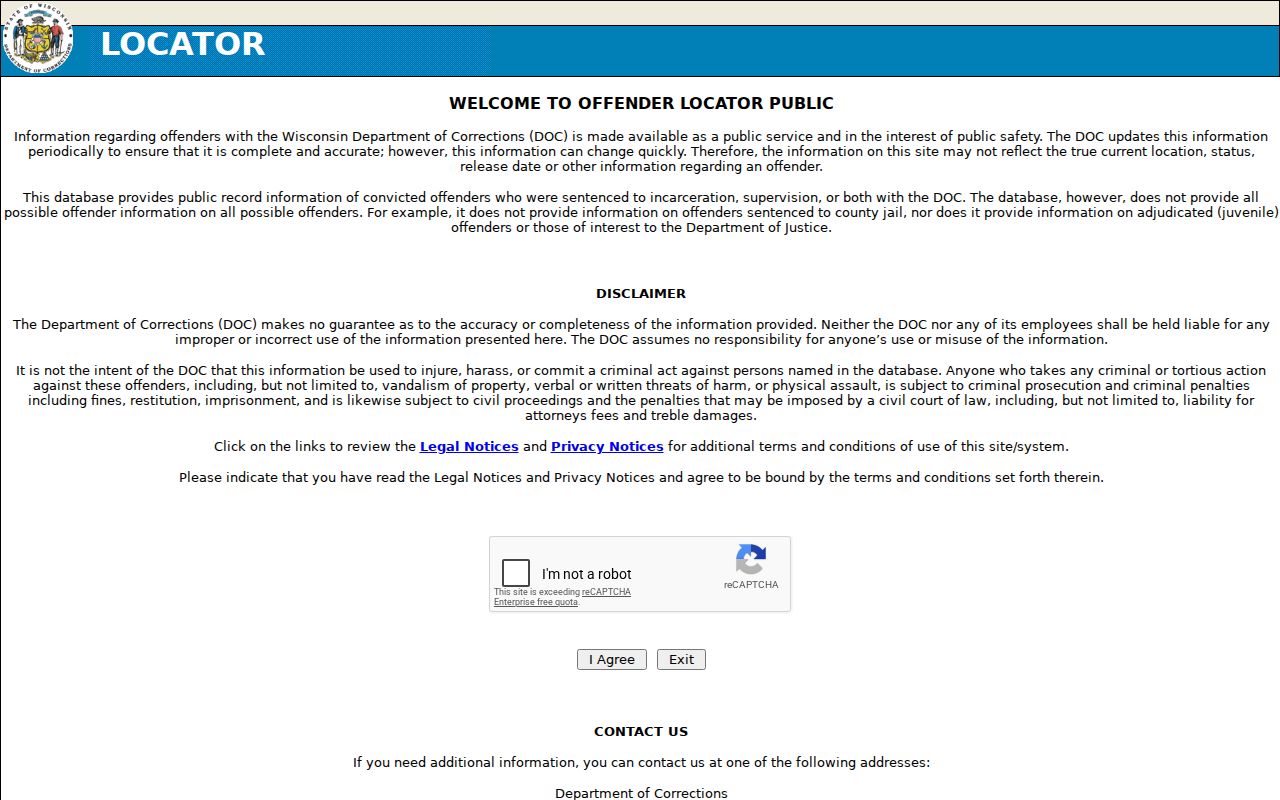
A DOC result usually reflects state prison or community-corrections involvement, not a person's current location in the Clark County Jail.
Clark County Criminal Records: What They Contain
Read each Clark County record in the context of its source. Names and demographic details help distinguish people but do not prove identity on their own. Charge rows show an allegation and statute at that point in the process. Disposition rows show how a charge ended. Sentence and corrections fields describe the result and later status, subject to reporting time and access limits.
| Name and identifiers | Legal name, aliases, birth data, agency or court identifiers, and sometimes lawful demographic descriptors. |
|---|---|
| Arrest and booking | Incident number, arresting agency, event and intake times, booking number, holds, bond, and release or transfer. |
| Charges and statutes | Initial allegations, filed counts, statutory citations, severity, amendments, and dismissals. |
| Disposition | Conviction, dismissal, acquittal, plea, verdict, or other charge-level outcome. |
| Sentence | Jail, prison, probation, extended supervision, fine, restitution, and court conditions when public. |
| Custody or supervision | Agency status, institution or supervising region, and dates that the public system releases. |
- Disposition
- The final reported outcome of a charge or case.
- Recognizance bond
- Release on a signed promise to appear, subject to court conditions, without upfront cash.
- Extended supervision
- Wisconsin's community portion after confinement in a bifurcated prison sentence.
- Expungement
- A narrow Wisconsin process that removes a qualifying case from ordinary public court access after the statutory conditions are met.
For full docket and sentencing detail, the dedicated Clark County Court Case Lookup follows the prosecution file from complaint through disposition.
When Clark County Records Disagree
First identify the owner of the questionable fact. The clerk owns the court docket and filed orders. The arresting agency owns its report. Jail staff own booking and custody entries. DOJ/CIB owns the compiled state history, and DOC owns correctional status. A correction request sent to the wrong office cannot fix the source.
Obtain the Clark County judgment or certified order when the dispute concerns a disposition. Compare dates, agency numbers, case numbers, and charge outcomes. Then use the Wisconsin DOJ challenge process if the CIB entry is wrong. A portal screenshot may show the problem, but it is not the certified proof that changes an official record.
The Clark County Clerk of Circuit Court page identifies the office that preserves circuit-court files and certified case material.
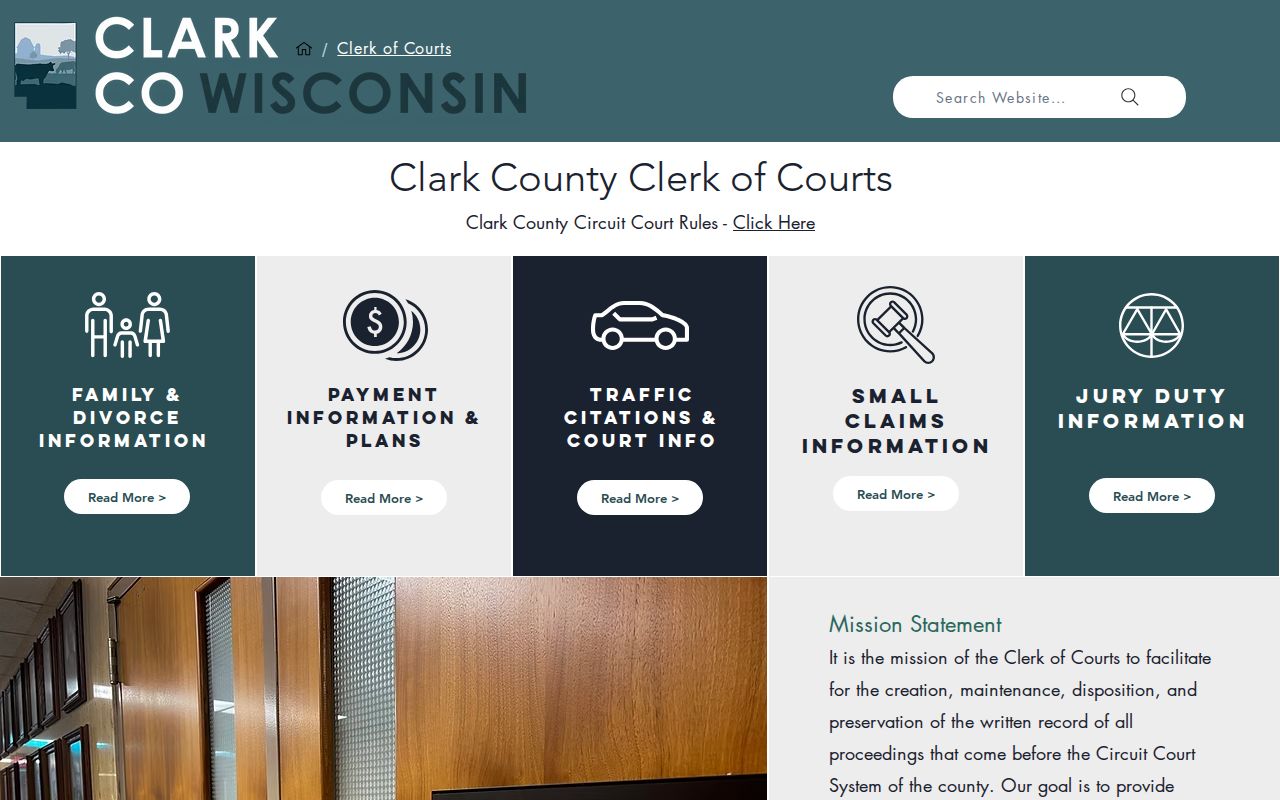
Room 405 is the practical source when exact judgment, sentence, or docket wording must support a correction.
Wisconsin Public Access Laws
Wisconsin Public Records Law begins with a strong presumption of access, but other statutes and the custodian's balancing test still protect some material. Clark County agencies must respond as soon as practicable and without delay. State law does not set a universal ten-business-day deadline. Requesters should describe an identifiable existing record and ask for the nonexempt part if some fields must be redacted.
Key Wisconsin laws:
Wis. Stat. §§ 19.31-19.39 presumes access while allowing statutory limits and a public-records balancing test.
Wis. Stat. § 165.82 authorizes DOJ criminal-history searches and related fees.
Wis. Stat. § 758.171 supports access and management of court records subject to governing rules.
Wis. Stat. § 973.015 creates Wisconsin's narrow expungement path for qualifying cases.
Wis. Stat. § 938.396 limits access to juvenile law-enforcement and court records.
Public access is not permission to misidentify or harass someone. An arrest is not a conviction. Court records, state histories, registry information, and police reports each keep their own legal boundaries.
Clark County Sheriff Record Requests
The Clark County Sheriff's Office accepts written requests for deputy-created incident and accident reports by email at records@co.clark.wi.us, by fax at 715-743-4350, or by mail to Attention: Records, 517 Court Street, Room 308, Neillsville, WI 54456. Walk-in service goes to the same room. Include the requester's name, the incident or accident date, the incident number when known, and a clear description of the record and preferred format.
A municipal police report does not move into sheriff records just because the later case is filed in Clark County. Contact Neillsville, Colby-Abbotsford, Greenwood, Loyal, Thorp, Owen-Withee, or the other creating agency for its own report. State Patrol and DNR records likewise stay with their state custodians.
| Delivery or item | Published fee | Payment |
|---|---|---|
| Email or fax delivery | No current charge | Not applicable |
| Black-and-white copy | $0.25 per page | Cash or check |
| Color copy | $1.00 per page | Cash or check |
| CD with audio, video, or photos | $10.00 | Cash or check |
The official sheriff records service publishes the request route, form instructions, and current copy prices.
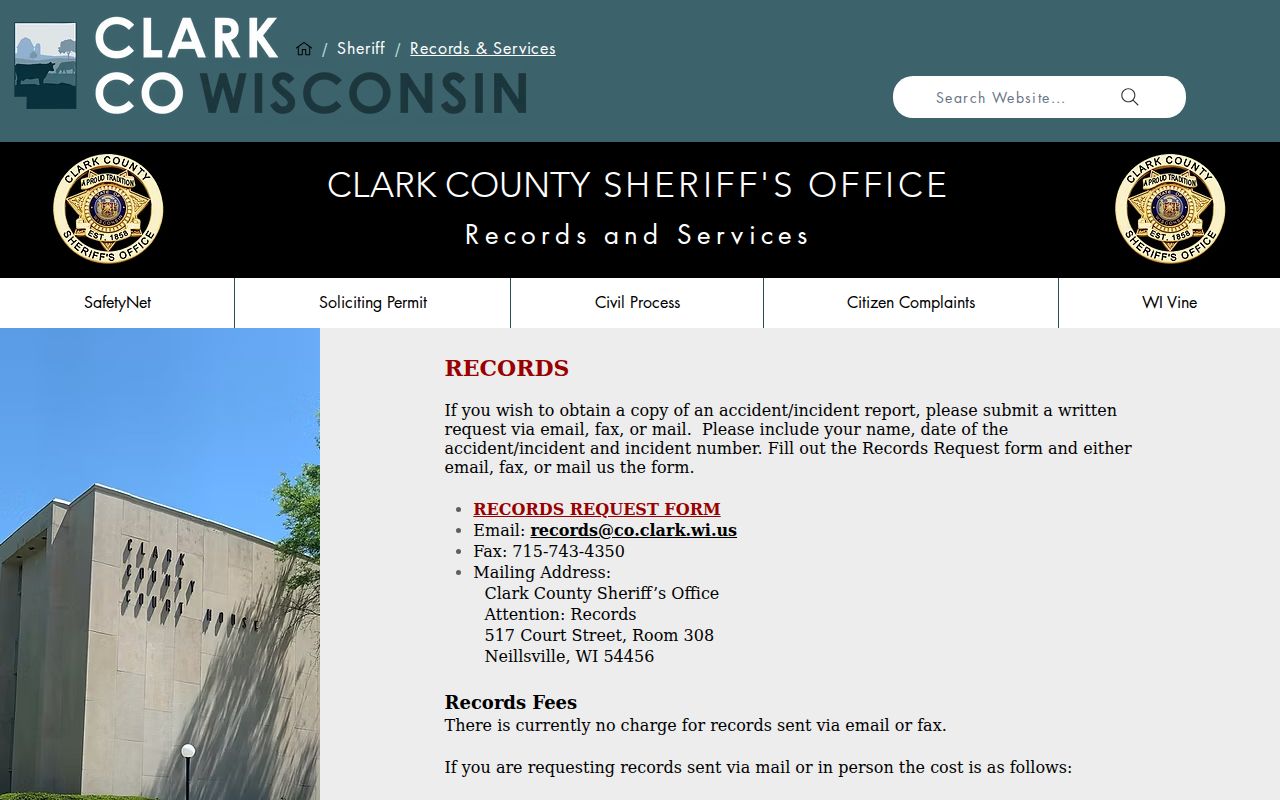
Email and fax delivery are currently free, while physical media and paper copies use the sheriff's listed rates.
Restricted, Sealed & Expunged Records
Juvenile law-enforcement and court records are generally confidential under Wisconsin law, subject to defined people and circumstances. Custodians also redact Social Security numbers, account data, protected addresses, medical details, and victim or minor identifiers. Active investigations can justify withholding under a statute or the public-records balancing test. Restricted material will not become public merely because a broad name query is used.
Wisconsin expungement under § 973.015 is narrow. For qualifying offenses committed before age 25, the judge must order expungement at sentencing, the offense must fit the statutory limits, and the sentence must be completed successfully. The person should retrieve the judgment and sentencing events from WCCA and Room 405, confirm the original order, obtain completion proof, and ask the clerk about the accepted filing route.
Expungement removes the qualifying circuit-court record from ordinary public access. It does not promise that each police or CIB record vanishes. A certified Clark County order may need to be sent to the agency that still displays an entry.
Clark County Warrant Records
No verified Clark County sheriff active-warrant name search or daily warrant list was found. That does not make the search a dead end. Check public WCCA docket events, contact the issuing court or clerk, call sheriff nonemergency at 715-743-3157, and submit a focused request to sheriff records. Unserved, sealed, or operational warrant facts may still be withheld.
A bench warrant commonly follows a missed appearance or failure to follow a court direction. An arrest warrant rests on a judicial probable-cause finding. Search warrants may remain nonpublic while execution or investigation concerns persist. A blank WCCA result does not prove that no warrant exists.
Resolve a possible warrant through its case number and issuing court. Avoid an unplanned courthouse or jail visit based only on a web result. The clerk and qualified counsel can explain the court's route for appearance, bond, scheduling, or recall. Only law enforcement or the issuing court can confirm current enforceability.
Clark County Diversion Record Paths
Two Clark County programs can alter how a case appears over time, but they are not interchangeable. The District Attorney's Deferred Acceptance of a Guilty Plea program can work before filing or after a plea under an approved agreement. Published terms include a $200 fee, a minimum twelve-month period, age and record limits, bond compliance, and no new charges. Success can prevent filing or lead to a reduced or dismissed filed charge, depending on the agreement.
Recovery Court is a treatment-intensive court program. Its published process has five phases over at least thirteen months, with treatment, testing, court appearances, case management, and team staffing. The docket and signed orders show the legal status. A program name alone does not reveal whether a charge was filed, reduced, dismissed, or left as a conviction.
The Clark County Sheriff's Office page provides the broader public-safety and records contacts surrounding these justice routes.
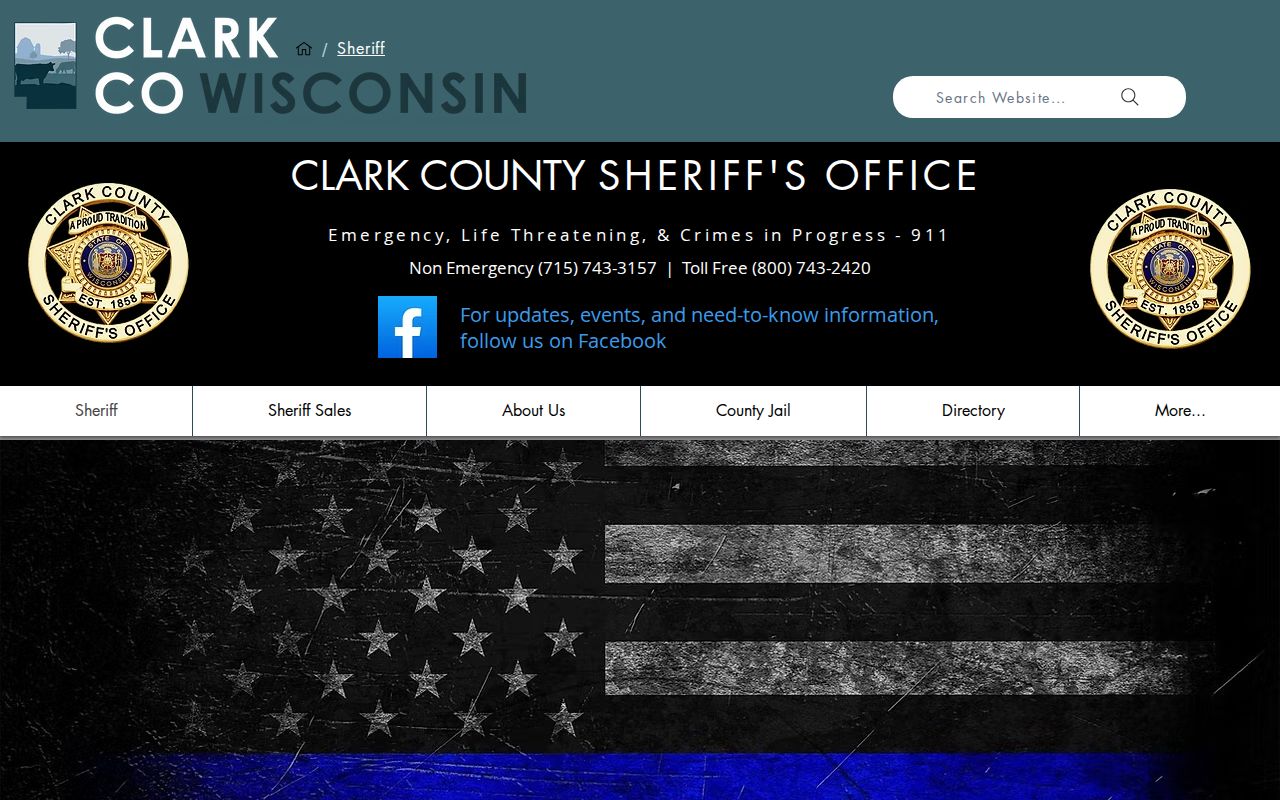
Sheriff records document law-enforcement events, while the DA agreement and circuit docket determine how diversion affects the prosecution record.
Clark County Justice Record Timeline
The physical record system reflects three eras. Clark County's present courthouse base opened in 1966. An east addition followed in 1978 after planning for a jail, offices, and heating plant. The current 126-bed jail was dedicated in 2000. The connected complex now places the sheriff, clerk, DA, jail, and Recovery Court close together, but on separate floors and at distinct entrances.
The older 1897 jail remained active into the late 1970s. In 2026 the county sought bids to remove the old jail museum and attached garage at 215 East Fifth Street. That change is another milestone in the same campus where current records are made and stored.
Clark County spans more than 1,200 square miles, so email, phone, and state portals are vital fallbacks. The county's communications center serves the sheriff, jail, eight police departments, State Patrol, DNR, and many emergency services. An agency name and incident number often route a record more reliably than the postal city on the event.
City-by-City Criminal Records in Clark County
City records require care in Clark County. Abbotsford and Colby share one police department and municipal court, and both cities cross the Clark and Marathon county line. Neillsville police keep city arrest records, but no current city municipal-court portal was found; circuit-court cases route through WCCA and the Clark County clerk. The official 2025 whole-city population ranking places Abbotsford, Neillsville, and Colby in the top three.
Abbotsford Record Check
Population 2,455 · Shared Colby-Abbotsford police and municipal court; verify which county handled the record.
Neillsville Record Check
Population 2,360 · City police reports stay with Neillsville, while state criminal cases route to circuit court.
Colby Record Check
Population 1,930 · Police and municipal-court functions are shared in Abbotsford across two-county geography.
Each city card follows the local records path rather than assuming that every arrest, citation, or police report lands in the same Clark County office.